
Six core research areas where we push the boundaries of human-machine interaction and industrial innovation.
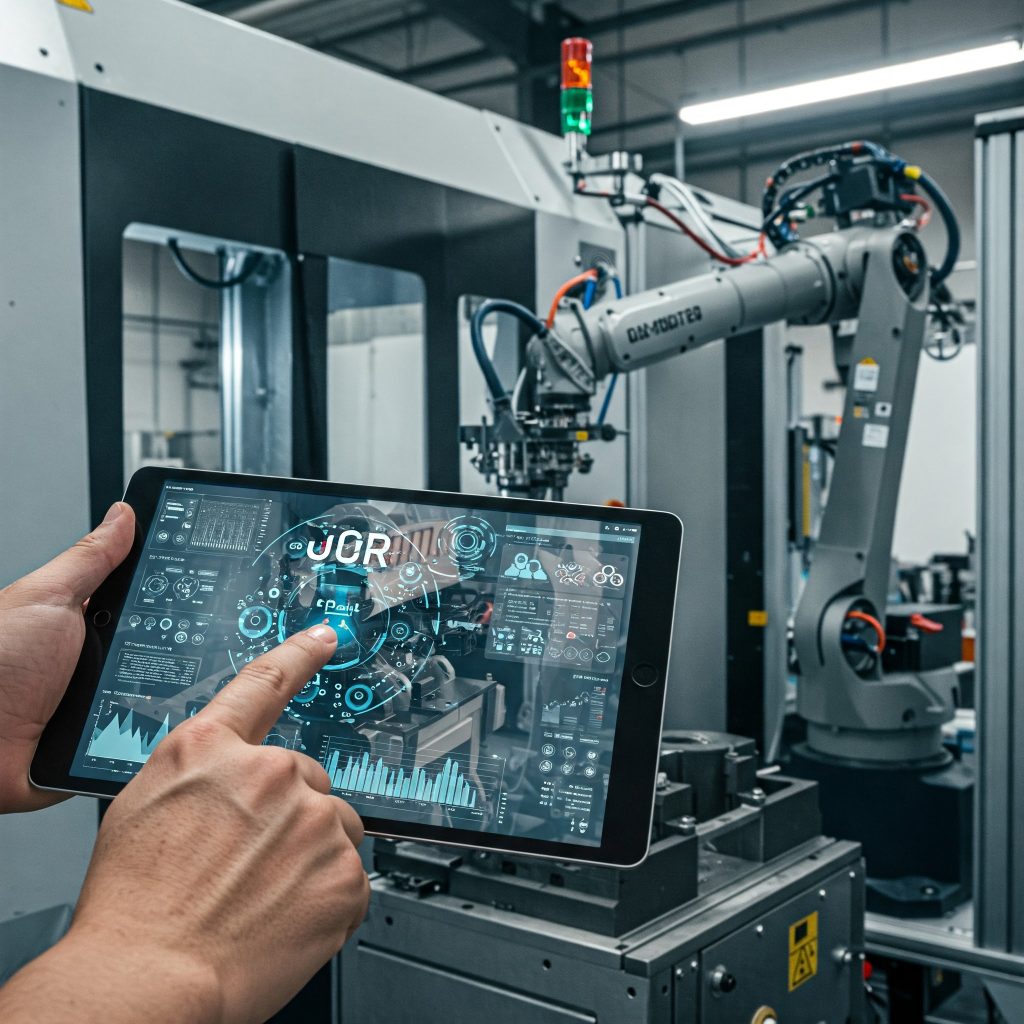
Refers to the study and design of meaningful, efficient, and aesthetically coherent interactions between people and systems — from industrial control interfaces and software platforms to gesture-based, voice, and brain-computer interfaces. Effective interface design balances cognitive load, usability, and visual aesthetics, recognising that operators, patients, and end users each bring different needs and mental models to the systems they engage with. Within our research group, we explore interaction design in industrial and medical contexts, addressing both the functional and experiential dimensions of human engagement with technology.
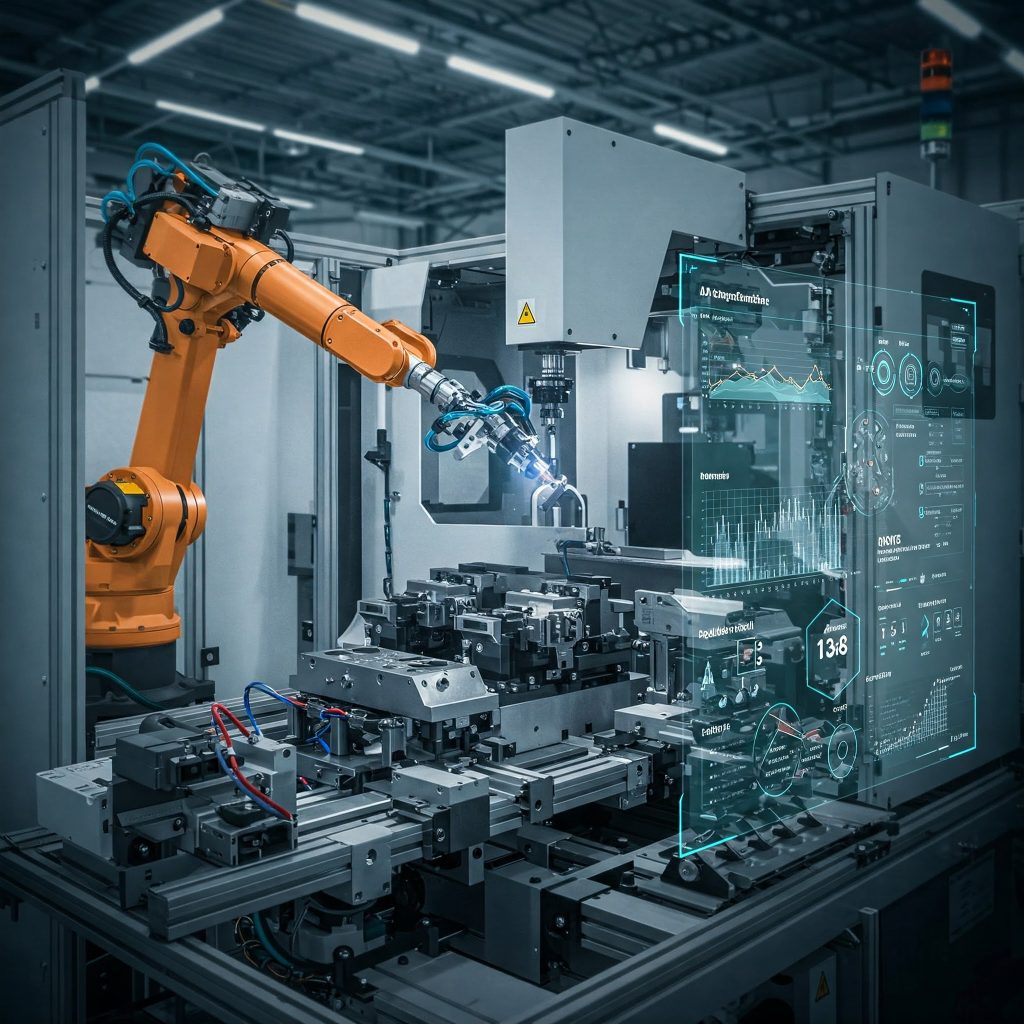
Refers to the design, programming, and deployment of robotic systems in manufacturing and industrial environments. From welding and palletising applications to reconfigurable robotic cells and autonomous mobile platforms, our work spans offline programming, layout optimisation, expert systems, and energy-efficient automation. We also investigate safety management and system reliability in robotic manufacturing settings. Within our research group, we address the full engineering lifecycle of industrial robotic systems — from concept and design through to integration and performance evaluation.

Refers to the technologies and methodologies that enable industrial systems to sense, communicate, adapt, and protect themselves in the context of Industry 4.0 and beyond. This includes artificial intelligence applied to manufacturing decision-making, digital twin modelling of robotic and production systems for real-time simulation and control, and cybersecurity frameworks for connected robotic environments. Within our research group, we investigate how these converging technologies transform the architecture, resilience, and intelligence of industrial systems.
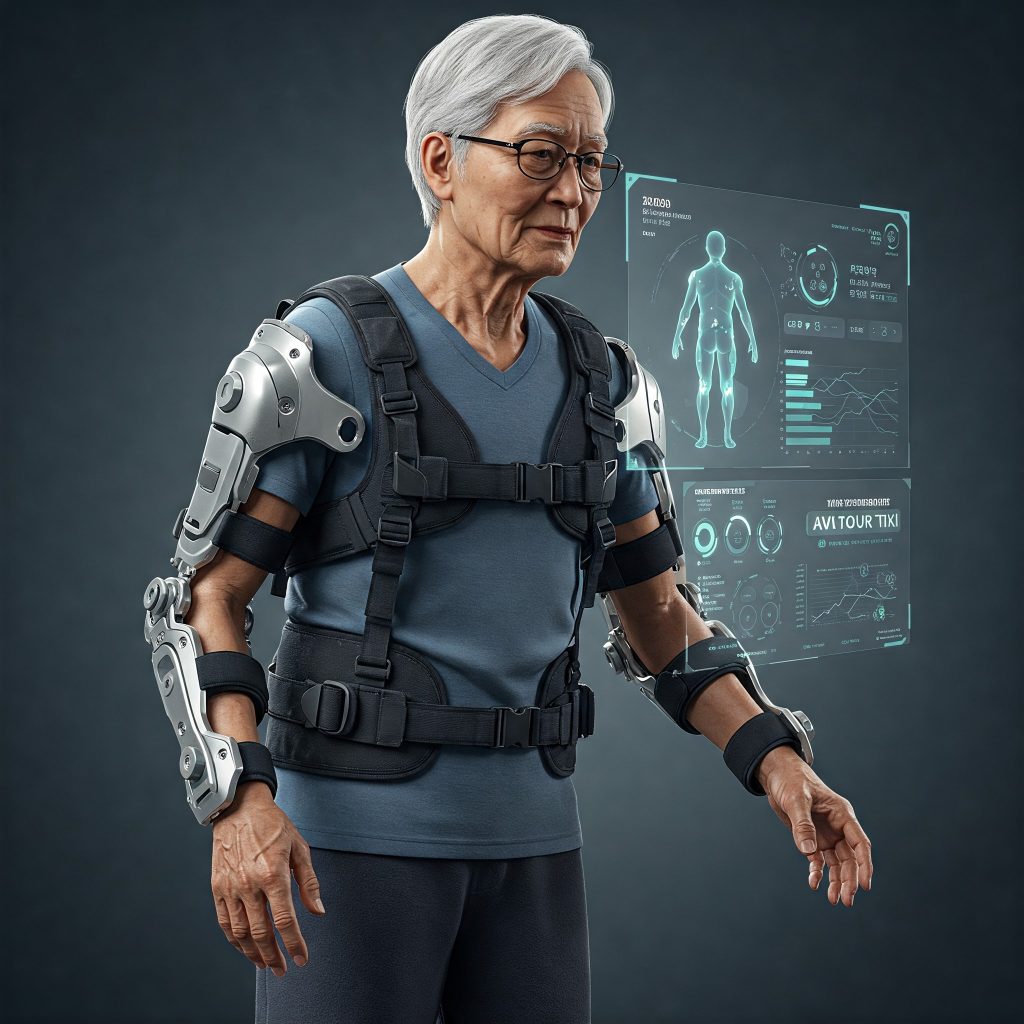
Refers especially to robotic systems — mainly exoskeletons — designed to deliver structured physical therapy and motor recovery support to patients following surgery or major medical events. Our research focuses on upper-limb rehabilitation for cardiac patients, combining motorised assistance, mathematical modelling, and immersive VR feedback to support recovery and improve quality of life. Within our research group, we address the full development cycle of rehabilitation robotic systems: mechanical design, control, clinical validation, and home-based telerehabilitation.

Refers to the development of robotic instruments and sensor systems that assist surgeons in the detection, localisation, and treatment of tissue pathologies during minimally invasive procedures. Our work centres on the intraoperative detection of small digestive and colorectal tumours using proximity and inductive sensors, RFID-based laparoscopic instruments, and robotic-assisted medical devices. Within our research group, we address the engineering challenges at the intersection of sensor design, robotic instrumentation, and clinical applicability in oncological and surgical settings.

Refers to the next stage of industrial transformation — one that places people, resilience, and sustainability at the centre of production and organisational systems. Where Industry 4.0 focused on automation and connectivity, Industry 5.0 reintroduces the human element as essential rather than residual. Our research in this area addresses human reliability assessment in collaborative human-robot environments, the adaptation of professional training and identity for new industrial realities, knowledge management in technical organisations, and the design of communication and collaboration platforms that support people within complex institutional structures.
Refers to the application of analytical and systems-thinking methods to improve the long-term performance, resilience, and sustainability of production and service organisations. Our work spans mathematical modelling and optimisation of manufacturing processes, product-service lifecycle management and servitisation strategies for SMEs, frameworks for organisational agility and continuous improvement, and digital ecosystems that embed sustainability literacy into educational and professional settings. Within our research group, we address problems where technology, management, and human behaviour intersect — and where operational decisions carry measurable economic and environmental consequences.
Have a project in mind? Let's get to work.
Contact Us